
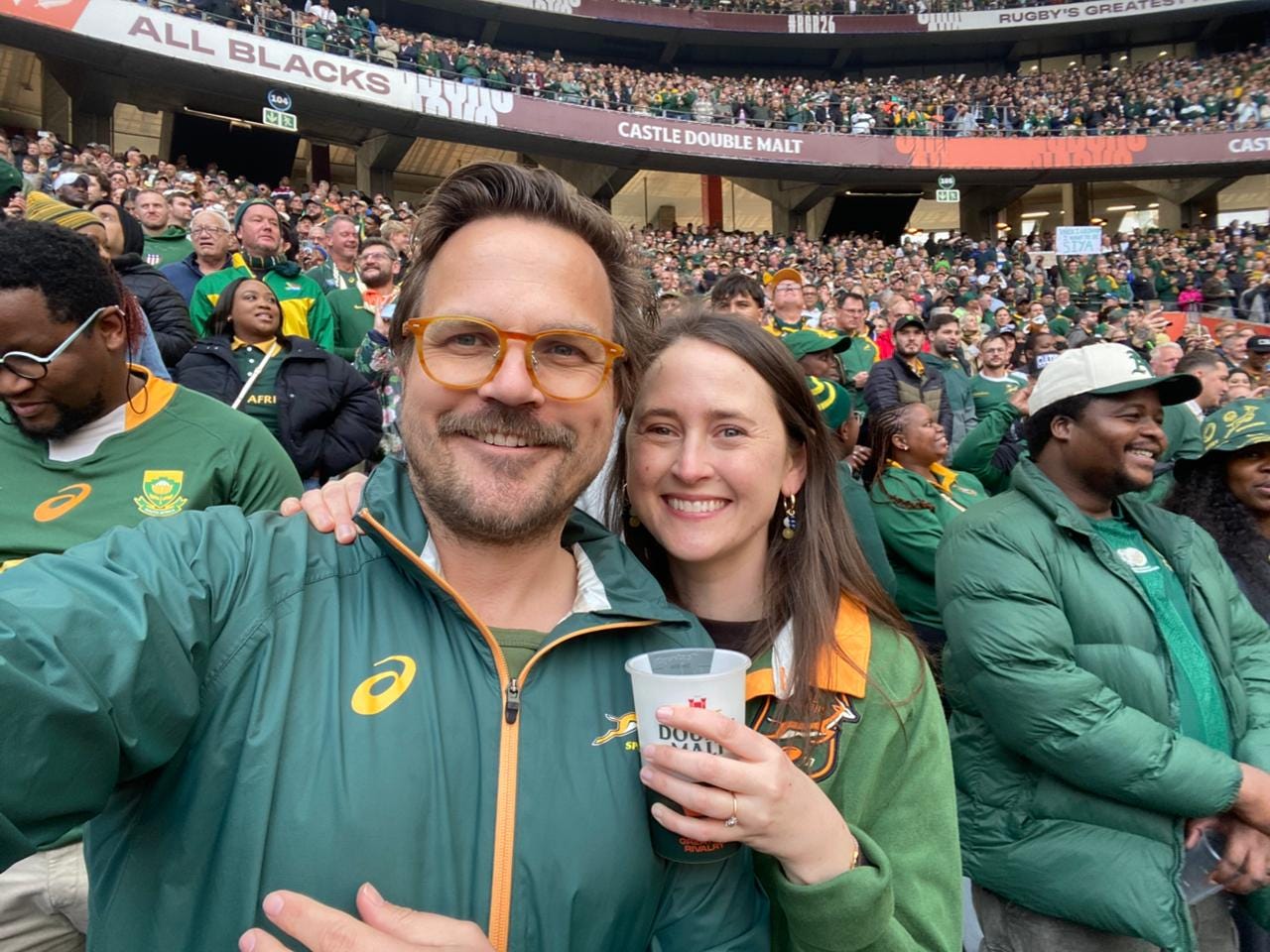
The last time I went to the FNB Stadium in Soweto was not for a rugby match. I had moved up north to start my career as a lawyer, and within my first month there was a concert in town that I’d dreamed about attending since I fell in love with music as a boy. Bruce Springsteen and the E Street Band were touring South Africa in February 2014.
Imbibing the very best of what South Africa had to offer that day, the first of several songs that floored me that evening was The Land of Hope and Dreams. Springsteen played it immediately after opening the main set with a cover of The Special AKA song Free Nelson Mandela, in the immense venue developed for the global showpiece that was the 2010 FIFA World Cup. Not only was The Calabash the place of Nelson Mandela’s final public appearance, at that World Cup, but his memorial service had been held there less than two months before the Springsteen concert.
The Boss, fully aware of the context he found himself in, knew exactly what he was doing. Land of Hope and Dreams opens with a lover summoning his partner to jump on a train with him to a place of potential that is set to change the course of their lives. He will provide for her, stand by her side and be a good companion for this part of the ride. She needs to board the train with him, though.
This train carries saints and sinners
This train carries losers and winners
This train carries whores and gamblers
This train carries lost souls
This train dreams will not be thwarted
This train faith will be rewarded
This train hear the steel wheels singin’
This train bells of freedom ringin’
Arriving with my bags in Johannesburg just one month before, the Land of Hope and Dreams was certainly how the city felt at the time to one of its newest residents. I had spent my first weekends in town astonished by Maboneng and Braamfontein. There was a story of renewal and regeneration developing that I hadn’t seen anything remotely similar to in the Cape, where I was born and raised.
The meaning of the Sesotho word Maboneng is “the place of light”. But after living in Johannesburg for nearly a decade, I watched its light, and many other similar beacons of hope, begin to fade. The city increasingly felt like it was out at sea, treading water.
Jules, a native Joburger, and I moved to my hometown to open up the Cape Town studio of our flower business. Our three-year-old son, Thomas, was born shortly thereafter. But the majority of our business is still strongly Joburg based, which requires one of us to return to town each month. A couple of months ago, we were in Johannesburg together as a family over Thomas’ school holidays.
We popped into a place we’d been hearing great things about. The impressive new “green town square” that is the Nine Yards Precinct in Rosebank, which is a credit to the city. We bumped into the father of a friend of ours who had, like us to a certain extent, lived between Johannesburg and Cape Town over the decades. He was enthused by the new development too and mused to us over a spoonful of gelato ice cream:
“That’s the thing about Johannesburg, it’s a boom or bust city.”
A few days later we saw Siya Kolisi at The Pantry at Marble, another Johannesburg establishment that Cape Town struggles to hold a candle to. Jules had now cottoned on to the fact that I had an ulterior motive for driving across the country to stay with her mother. The Springboks were kicking off their Test season in a few days’ time at Ellis Park against England, and it now made sense to her why I had been suggesting that it would be silly for us to drive home over a weekend.
Tickets were acquired, and a few days later, Jules and I were on our way to Ellis Park with our friends TJ and Lejanie. After witnessing another remarkable Springbok performance, we caught the Gautrain home and walked through the magnificent Park Station with tens of thousands of South Africans.
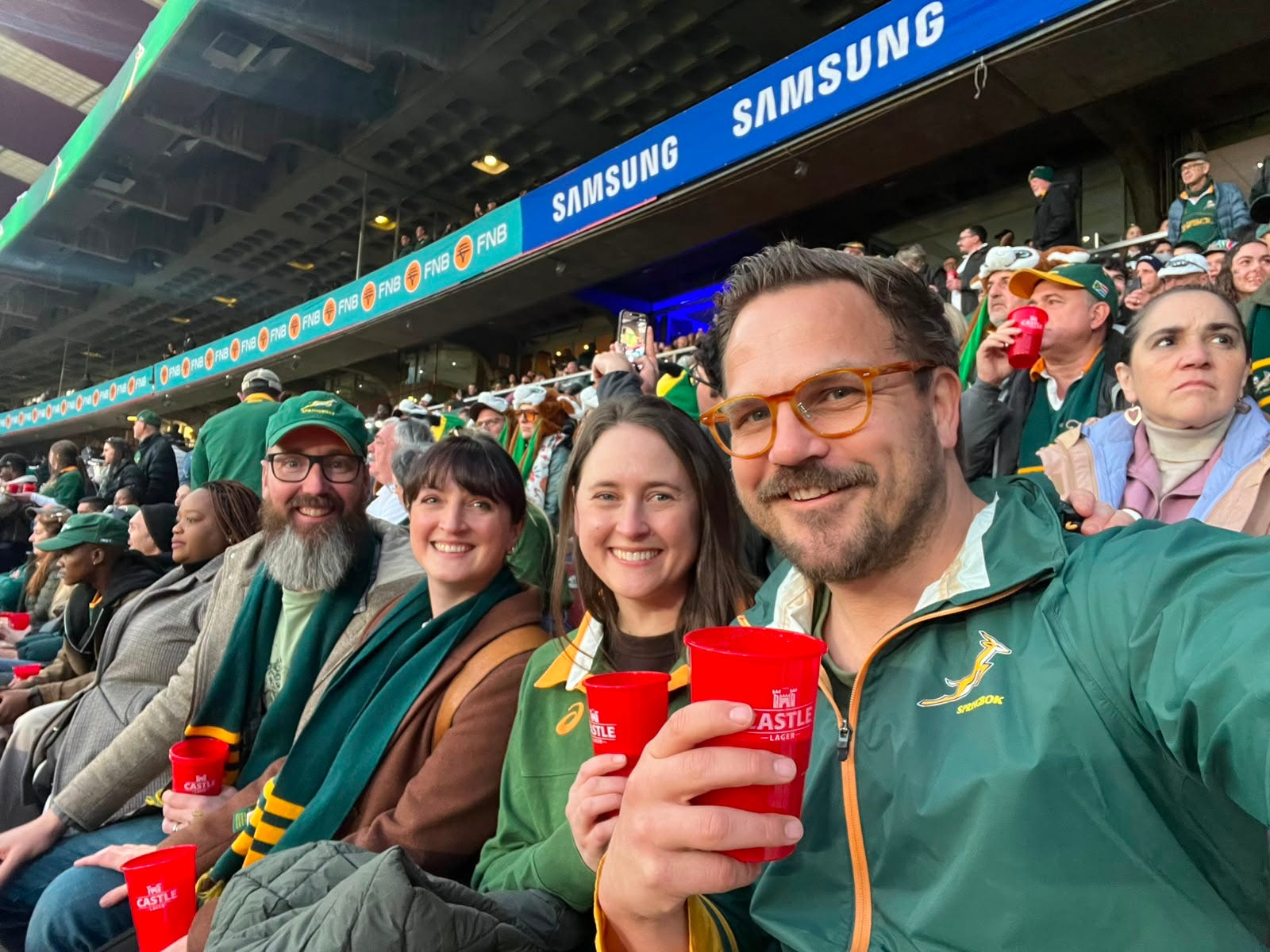
Both of us share a love for Johannesburg, as it has been so instrumental in each of our lives, and we found ourselves retelling the “boom or bust city” story over dinner that night at The Blind Tiger in Parkview. While the city has its issues, there certainly seems to have been a shift towards a more optimistic future.
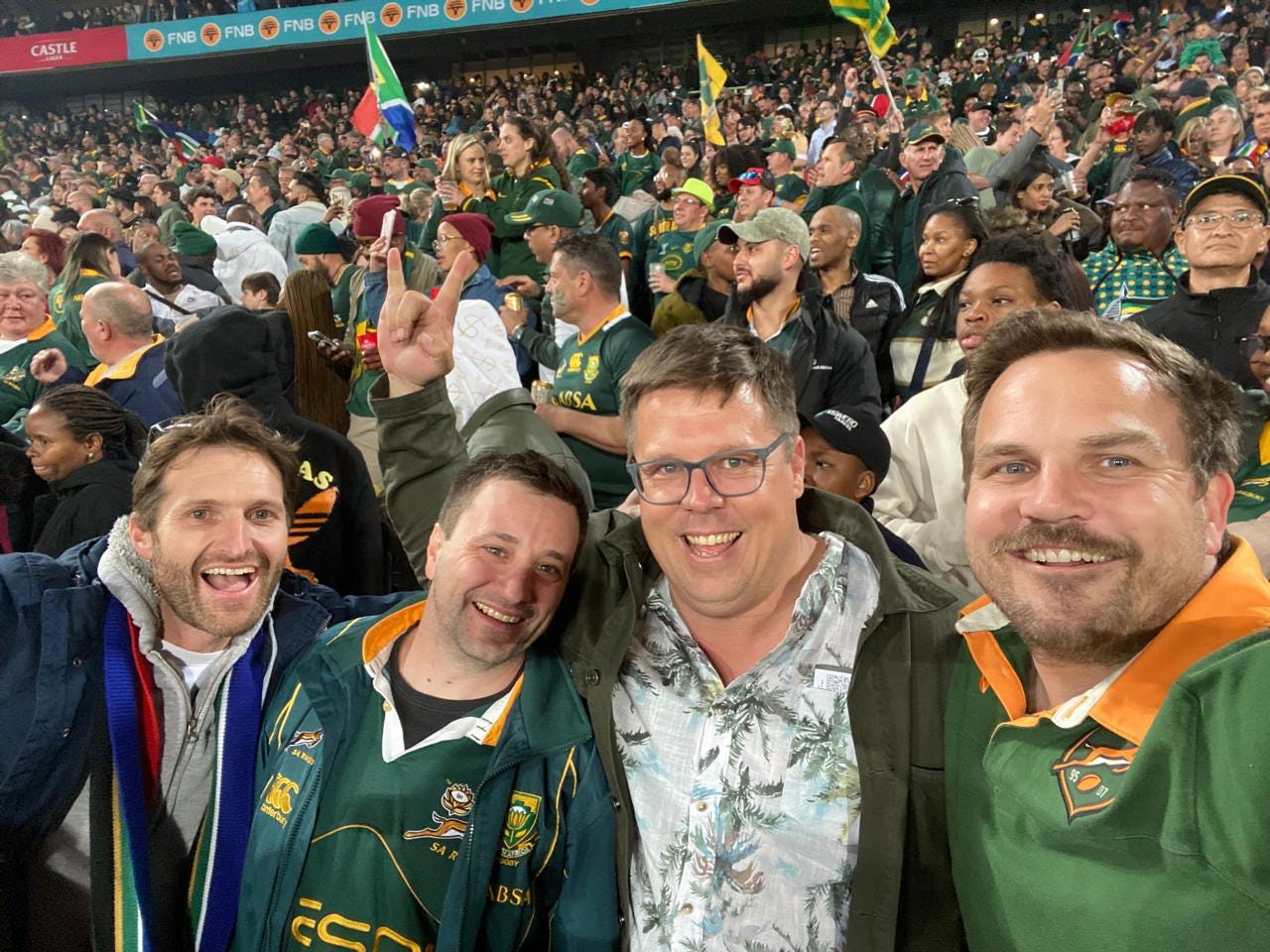
In Johannesburg this morning, with tickets for the FNB Stadium alongside my closest friends and close to 88,000 other South Africans, the proposition of the third Test of Rugby’s Greatest Rivalry is mouthwatering. It’s my third pilgrimage to Johannesburg in as many months for Test rugby (and work trips, of course), and I’m getting emotional wondering how many more times, if at all, I’ll get to see Siya, Eben and Pieter-Steph run out together for Rassie in the flesh.
I’m also reflecting on the “boom-or-bust city” comment once more. Because that description seems to extend well beyond the economics of the city. It perfectly describes the rugby played within it.
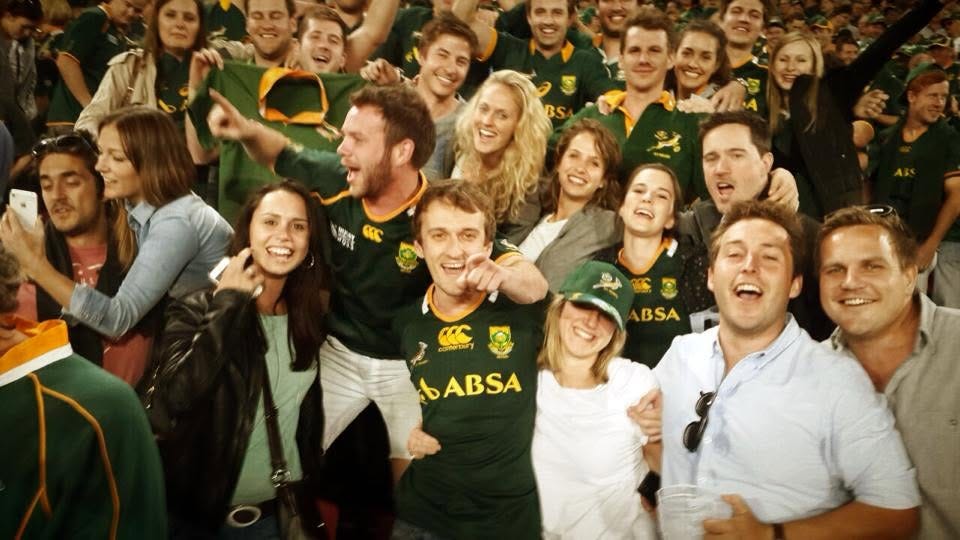
In my six outings to Ellis Park for Test rugby, I have witnessed some remarkable things. It started with the 2014 Springboks ending the greatest-ever All Blacks team’s 22-match unbeaten streak. That day, Duane Vermeulen played through broken ribs while Patrick Lambie kicked a 55-metre penalty in the final minute to win the match.
A few years later I watched Siya Kolisi’s first Test as captain, against England in 2018, when England raced to a 24–3 lead before the Springboks came roaring back to win. In 2024, the Springboks again left themselves a mountain to climb against the All Blacks in the final 20 minutes, then somehow did it, the comeback beginning with a sniping Grant Williams try.
I didn’t go to the Test against Australia last year, and I still don’t want to talk about it.
And then there was the first Test of Rugby’s Greatest Rivalry, two weeks ago to the day. It was a strange game of rugby in which the Springboks dished up physical dominance and sloppiness in equal measure, and the All Blacks went on to win with a remarkable performance.
This All Blacks team seems to know how to take every chance it is presented with. In the second Test in Cape Town, the Springboks were far more accurate and put in a massive performance, leading from the opening minutes and never really looking like losing. But the All Blacks were still knocking hard on the door, trying to snuff out any hint of celebration at the final whistle.
To say that the contrast of styles between the Springboks and All Blacks is compelling is an understatement. With two epic Test matches played, and two to come, there’s a lot of rugby still to be played.
Today, one team is likely to take an unassailable lead in The Greatest Rivalry in the boom-or-bust city. With the hard fields and thin Johannesburg air, it feels as though we could be in for a Test match that I’ll be telling Thomas about in the years to come.
Close to 88,000 people is not an insignificant number of citizens to have in the same place, at the same time, for a shared experience. Perhaps today will represent a turning point for more than just this series in an important year for Johannesburg.
There’s an old idea about the gambler at his happiest: that he is not happiest when he has won, but in those moments when the wheel is spinning and the outcome has not yet been determined. It is in those moments, when the result is beyond his control, that he feels most alive.
For every South African knows, that somewhere in their lineage there was a gambler that migrated towards the southern tip of Africa looking for a better life. And there’s a gambler in all of us that chooses to stay with the belief that things will continue to improve.
I’m on my way to FNB Stadium today. But as the final lines of the song Springsteen sang just over a decade ago, in a stadium built to represent the hope of a nation:
You don’t need no ticket
All you gotta do is
Just get onboard
You’ve got me psyched up! Come on the bokke!